Barefoot Journey to Yourself
Connecting with the Earth is one of the oldest ways to ground oneself—both literally and symbolically. Walking barefoot, whether on a forest path, over hot embers, or through morning dew, carries the ritual of returning to oneself. In many cultures, bare feet symbolize freedom, humility, and the courage to be in full contact with reality and one’s own body. This article is an invitation to a world where a step without shoes can be the first step toward healing, mindful living, and deep inner peace.
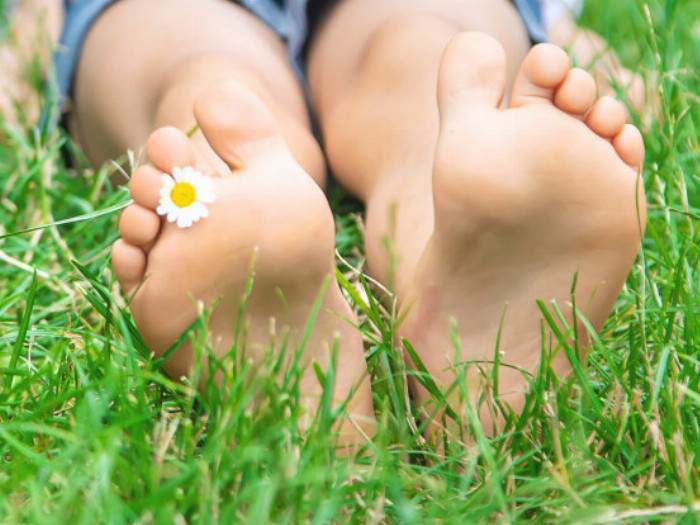
Our feet are our silent compass. They carry us when we fall and when we rise. They bear our past, present, and direction. The more we connect with them, the more we hear ourselves.
Each Step Connects Us to the Earth
Walking barefoot is not a trend; it is a return. A return to a natural state that has been intrinsic to humans for thousands of years. Barefoot walking was part of everyday life, rituals, work, and rest. In traditional cultures, walking barefoot was associated with humility, grounding, and gratitude. In some indigenous rituals, it is still a requirement to remove shoes before entering sacred spaces. And today? In shoes, we often forget what it truly means to “feel the world beneath our feet.” We forget that strength, balance, and inner peace flow from below.
Firewalking – A Ritual of Courage
Walking on hot embers, also known as firewalking, is an ancient purification technique practiced for centuries in various cultures worldwide—from Fiji to Greece, Bali, and Africa. It appears in shamanic traditions as well as modern self-discovery rituals. Firewalking is not a trick or a display of courage. It is deep work with the mind, body, and inner faith. The fire is not an enemy—it is a teacher. When you overcome your own fear, you can walk through fire. And your body remembers it.
Scientific studies show that during firewalking, deep focus, an altered state of consciousness, and often even euphoria occur—similar to meditation or trance. Fear gives way to trust. The mind slows down, and the body takes over. Feet serve as the bridge between will and action, between decision and movement. Step by step. Without shoes. Without doubt.
The Bare Foot as a Map of the Body
Each foot hides a map of the entire body. Reflex points on the feet are connected to organs, the nervous system, and even the psyche. Ancient Chinese and Indian medicine, as well as modern reflexology, confirm that gentle foot massages can release tension, activate detoxification, and bring deep healing. Sometimes, the first signal of illness comes through the foot—as pain, swelling, or stiffness. Are we listening?
Lymph, Posture, and Breathing
Walking barefoot activates more than 200 muscles and stimulates the natural movement of lymph. It promotes proper posture, balance, and deep breathing. The pressure on the heel upon stepping down and the subsequent rolling motion of the foot relaxes back muscles and pelvic tension. Studies published in the Journal of Foot and Ankle Research show that regular barefoot walking reduces back pain and improves postural stability. The body naturally aligns itself when in contact with the ground.
Science Returning to Its Roots
In recent years, barefoot walking has caught the interest of experts in neurology, physiotherapy, and psychosomatics. Studies indicate that contact between bare feet and the ground can significantly lower cortisol levels (the stress hormone), which negatively affects our immune system, sleep quality, and regenerative abilities.
Regular barefoot walking supports the parasympathetic nervous system, which ensures relaxation and bodily recovery. Foot receptors stimulate the brain, improve mood, and induce a state of inner calm. Some people experience a deep connection with the Earth, a meditative state, or a mild euphoria similar to what is felt after yoga or breathwork.
Research has also shown positive effects on heart rate variability, blood pressure stability, and overall adaptation to stress. And yet, it takes so little—just take off your shoes and walk. In nature. In the present moment. With humility.
From Necessity to Choice – A World Between Two Extremes
In many of the world’s poorest countries, barefoot walking is not a choice but a daily reality. For example, in some regions of Africa, such as Madagascar, where the average annual income per person does not cover basic living needs, people often cannot afford even simple footwear. Children walk barefoot to school, adults to work or markets, even on rough and dangerous terrain. Although this lifestyle maintains a natural connection with the Earth, it also brings risks—injuries, infections, and long-term health complications.
Despite economic limitations, incredible creativity and practicality emerge in some communities when it comes to footwear. Indigenous people, for example, craft shoes from recycled tires, ropes, fabric, or plastic packaging. The result is durable and functional footwear that lasts for months, often in extreme conditions. This ingenuity is not only a necessity but also proof of how deeply foot care is rooted even in places with minimal resources.
Barefoot – A Step Toward Nature and Responsibility
Today, even manufacturers of so-called barefoot shoes—minimalist footwear that respects the natural shape of the foot and allows free, natural movement—draw inspiration from ecological solutions. While these shoes provide basic protection, they do not restrict the foot with cushioning or unnecessary support. The foot works in them much like it does when walking barefoot—actively, vibrantly, freely.
Barefoot shoes are more than a trend. They are a statement. They support foot health, proper posture, and balance while also expressing broader values—environmental responsibility, a mindful lifestyle, and respect for nature. Taking care of the planet truly begins at our feet.
Hygiene, Beauty, and Scent
Feet that breathe suffer less from fungal infections, blisters, and odor. Natural hygiene can be simple—a chamomile soak, a salt bath, or peppermint oil. Instead of chemical sprays, herbal compresses or a homemade scrub with sea salt and coconut oil will suffice. And since feet deserve care, why not adorn them? Make an anklet from stones, shells, or colorful threads. A touch of beauty can be part of every step.
Walking as Meditation
Barefoot walking calms the mind. When the foot touches moss, stone, or soil, we instantly become still. In Buddhist monasteries, barefoot walking is a form of meditation. Each step is a prayer, the breath is an anchor. Walking barefoot in the forest is not rebellion—it is a return to one’s center. Many people worldwide describe how this simple act has helped them cope with anxiety, stress, and insomnia.
The Barefoot Path Home
When we take a few barefoot steps on a walk, something within us shifts. Feet become sensory organs, communicating with the world, connecting us with the rhythm of nature. It is a return home—not just to nature, but to ourselves. Each step is a step toward inner peace, toward oneself.
Calmory’s Final Inspiration
Silent Walking Ritual
Try walking barefoot for at least 10 minutes—in the grass, the forest, or the garden. No phone. No music. Just you and the Earth. Feel the surface, temperature, and texture. Every step is a touch of life.
Affirmations for Feet and Heart
- "My step is mindful."
- "I touch the Earth with respect."
- "With every step, I heal."
- "With each step, I feel the firmness of the Earth beneath me."
- "My feet guide me on a path of harmony and peace."
- "I am grateful for every step I can take."
Self-Care Ideas
- Enjoy a warm foot bath with sea salt and lavender.
- Massage your feet with coconut oil and notice which areas call for your attention—they need your care.
- Create a barefoot path with natural materials—sand, pebbles, pinecones, moss. Let your feet explore the world
Don't Be Afraid to Take Off Your Shoes in Nature
On your next trip, try taking off your shoes for a moment and walking barefoot on moss, soil, or stones. This simple act deepens your connection with nature and opens the door to silent awareness.
The Ritual of Gratitude Through Your Feet
Every evening, sit down, take one foot in your hands, and gently massage it. As you do, express your gratitude. For the journey it has carried you through. For every step it has allowed you to take.
Quotes for Reflection
- "Our feet carry us where our heart longs to go."
- "Walking is the oldest form of meditation."
- "Connection with the Earth begins beneath our feet."
Conclusion
Walking barefoot, whether out of necessity or as a conscious choice, teaches us humility, mindfulness, and gratitude. At Calmory, we believe that even the smallest steps can heal. Every touch of the Earth can be a return to oneself, to the body, and to life.
Sources and Inspiration:
- Journal of Foot and Ankle Research → Study on the effects of barefoot walking on back pain, stability, and posture - https://jfootankleres.biomedcentral.com
- National Library of Medicine – Grounding Research → Scientific insights on grounding, cortisol, and the parasympathetic nervous system - https://www.ncbi.nlm.nih.gov/pmc/articles/PMC3265077
- Scientific American: Why Firewalking Works → Source for the section on firewalking and altered states of consciousness during coal walking - https://www.scientificamerican.com/article/why-firewalking-works
- World Atlas: Firewalking Rituals Around the World → Context for ritual coal walking in various cultures - https://www.worldatlas.com/articles/what-is-firewalking.html
- Bosaturistika.cz (CZ) → Czech website about barefoot walking, barefoot shoes, and public inspiration - https://www.bosaturistika.cz
- Stezky na boso (CZ) → Specific trails for barefoot walking in nature, especially for families with children - https://www.stezkynaboso.cz
- Vivobarefoot (EN) → Information on the production of barefoot shoes and ecological principles - https://www.vivobarefoot.com
- Sole Hope → Project making shoes from tires for children in Africa - https://solehope.org
- Reflexology Association of America → Materials for the section on reflexology and the connection between foot pressure points and the body - https://reflexology-usa.org
- Wellness Mama – Natural Foot Care → Inspiration for natural foot hygiene and care - https://www.wellnessmama.com/13158/natural-foot-care

Calmory Author Team
We are a team of writers who believe in the power of stories and honest emotional sharing. We focus on topics related to mental health, personal growth, and everyday life as it is truly lived. We write with respect, openness, and humanity. Our texts come from personal experiences, from the heart, and from ordinary situations that we all go through.
Klid se dá naučit.
Začněte s Calmory ještě dnes.
Dostupné nyní pro iOS a Android

Naskenujte QR
a stáhněte si aplikaci